




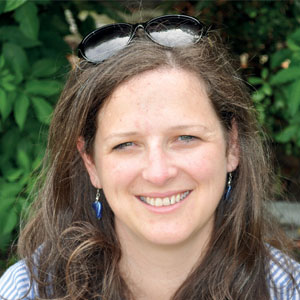
Penelope Rae, CIO, Kiwirail
As a state owned, national infrastructure and services business, KiwiRail has 150 proud years of asset engineering and investment. Generations have built a critical national transport network through hard labour, and a passion for making our country succeed. We have seen the organisation be transferred, transformed, recreated and reimagined, yet the stronger connections we deliver for communities, for business, for exporters and commuters across New Zealand has remained constant.
Similarly, how we work – the way we lay our track, repair our wagons, and move customers and their freight – has fundamentally remained stable. But, like every industry disrupted by technology, that is changing. Exponential increases in processing power and storage, products emerging that blend physical and digital data into new information and services, the seemingly infinite capabilities of cloud computing - we are seeing a massive opportunity to gain insight into our business, and make a wholesale change in how we run and manage our operations.
For many years, particularly in our organisation which hasn’t traditionally been high tech, we have always seen “IT” as separate and distinct from “the business. IT looked after providing computers and phones, making sure business software was working effectively and well managed, delivering “IT projects” and maintaining security of information and services.
As our business looks for ways to leverage technologies embedded within their operational assets to provide a commercial advantage, the traditional IT model and scope must be reconsidered. How do we best support the emergence of this “Operational Technology” (OT) domain? Is it productive, or even possible, to draw a line between IT and the business in a world where OT becomes the norm?
Over the last few years, KiwiRail’s digital transformation has taken us from a wholly insourced, large IT department focussed on technical solutions and support, through to a contemporary, mixed source, digital first team. We have established cross functional product teams in partnership with the business, managing integrated backlogs, rapid prototyping and lifting the pace of our delivery.
As our business looks for ways to leverage technologies embedded within their operational assets to provide a commercial advantage, the traditional it model and scope must be reconsidered
This has got us to the first table – one we sit at alongside our business, partnering on improving the services we provide our customers and developing software based solutions to business issues. The other table, the engineering operations table, has been a little more elusive.
OT products are not new in our business, and have been in use for some time. These are tools our engineers have used to aid the day to day operation, such as detecting anomalies like overloaded wagons and wheel flats, or to prevent track damage and/or safety issues. The IT involvement in these engineering tools has been minimal to non-existent. They were seen as purely operational tools that traditionally didn’t require management or support of as an IT service.
Cyber security is changing all of that. As our understanding of security requirements has grown, there is an appetite and acceptance in our operations teams for what has traditionally been an IT department function. Change management, software testing, systems governance – these are some of the IT controls that are now considered as critical as our usual engineering controls.
Our existing tools are being upgraded with more “smarts” built in, collecting ever increasing amounts of data, and being connected to each other and to our network. We are seeing pockets of innovation and exploration into these IoT technologies within our business. KiwiRail assets can now start to generate high frequency data points across a broad range of conditions. With these opportunities, we are taking a partnership role with our engineering colleagues, helping to both question and answer - how do we best collect data from our operational assets across a diverse and ever-changing landscape? How do we keep our information secure? Where are the opportunities to leverage further value? How can we collect and share IoT data across our organisation, as efficiently and effectively as possible? What does this mean for the traditional ways we manage our assets, and how can we use information to reimagine our operations?
Using a traditional “command and control” model– layering governance on governance and imposing IT practices across the operation – would risk alienating ourselves from our business partners and being perceived asa hand brake or just too hard to engage with. Our focus must be on co-innovation, all the while helping a shift from “IT” being a department to all our business being “IT”. Having digitally savvy engineers working hand in hand with engineering savvy digital teams is our aim.
For this to be effective, we must stop thinking of ourselves as just a department or a team providing IT services, distinct from the other parts of the business. Our role now is to help embed “IT thinking” in an operational world.
We can move our thinking about our role as a team, and the role of our people, and get deeper into the operational part of our business, partnering to experiment and realise value in a dynamic, digitally enabled world.
As CIOs we need to continually reassess where the value lies for our organisation – and change shape accordingly.

